When daylight saving time ends, darkness seems to arrive almost overnight. Employees who were leaving work in daylight may suddenly be walking to their cars after sunset, customers may be approaching your building in the dark, and interior spaces may rely more heavily on artificial lighting throughout the day.
These shorter days don't necessarily cause commercial lighting problems, but they can make existing issues much more apparent. Dark parking lots, uneven illumination, failing fixtures, and poorly timed lighting controls may become more noticeable once natural daylight no longer helps compensate for them.
Winter can be an ideal time to step back and evaluate how well your commercial lighting is actually performing.
Dark Areas in Parking Lots and Walkways Become Easier to Spot
One of the first places lighting problems may become apparent is outside your facility.
During spring and summer, employees and customers may rarely experience the parking lot after dark. Once the clocks change, those same areas can suddenly be in darkness during busy arrival and departure times.
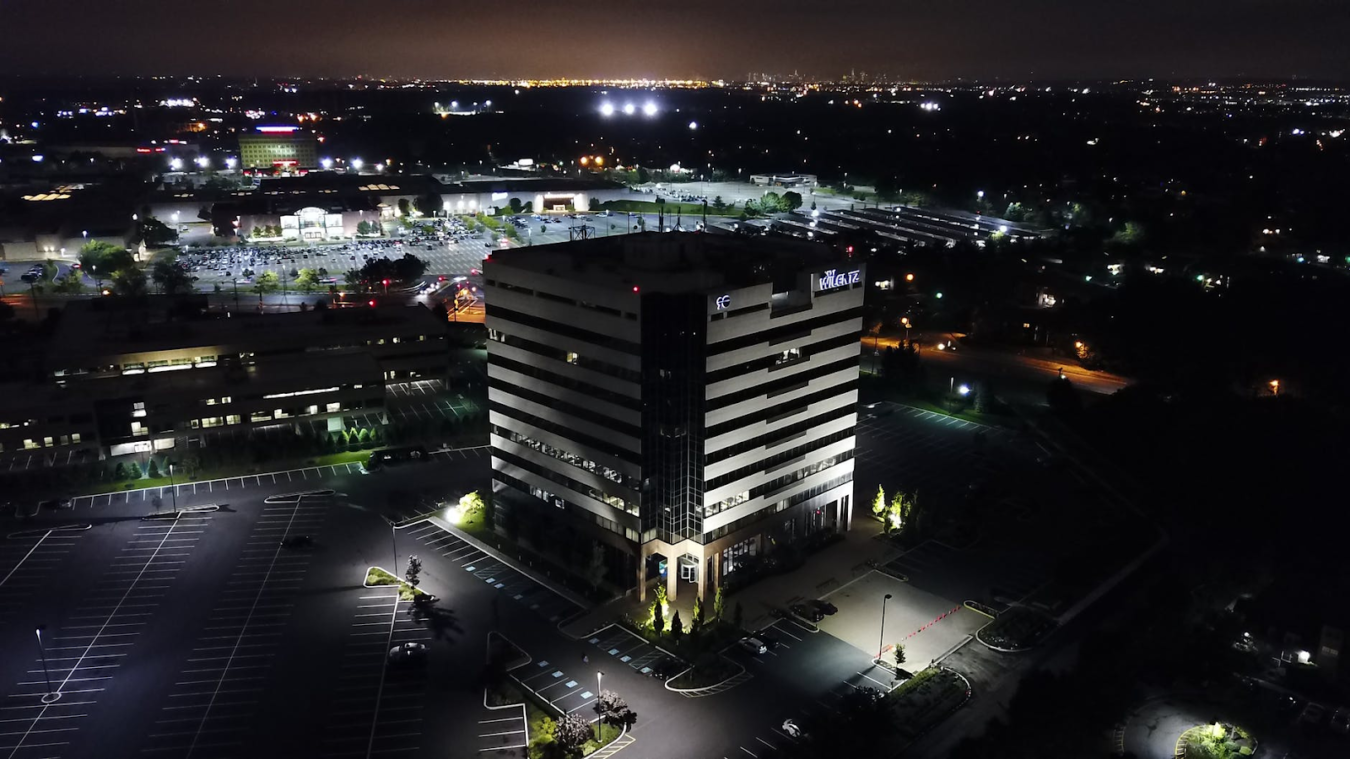
Take a look at your parking lot lighting after sunset. Are there sections that are noticeably darker than others? Are sidewalks and pedestrian routes consistently illuminated? Does the path from a parking space to the building entrance provide good visibility?
Effective exterior commercial lighting should be evaluated as a complete environment rather than as a collection of individual fixtures. A fixture may technically be operating while still leaving an important pedestrian route or portion of the parking lot poorly illuminated.
Building Entrances Can Look Very Different After Dark
Entrances have to help employees, customers, and visitors comfortably navigate into a building. That becomes even more important when people are arriving after sunset.
Walk toward your entrance as a visitor would. Can you easily identify where you're supposed to go? Are sidewalks, steps, ramps, and other changes in elevation clearly visible? Are entrances and directional features easy to recognize?
Pay attention to the transition between exterior and interior spaces as well. Major differences in brightness can make the transition less comfortable.
Earlier darkness gives facility managers the opportunity to experience the entrance under the same conditions that employees and visitors experience every day.
Failing Fixtures Become Harder to Ignore
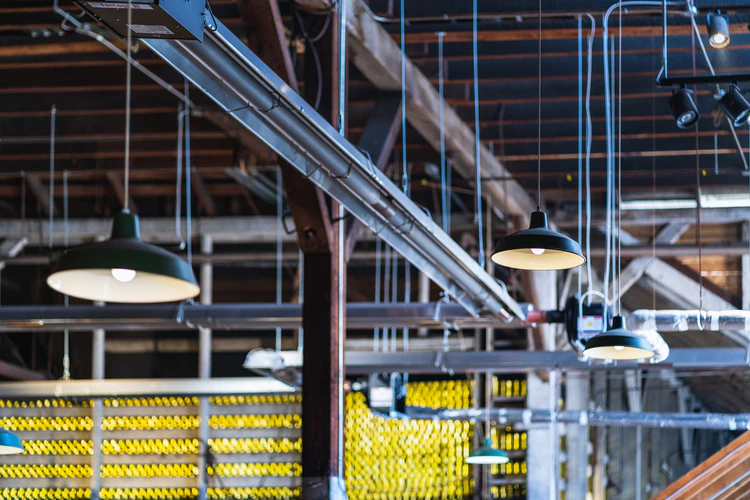
A burned-out exterior fixture may be easy to overlook during the summer, when it doesn't get dark until late in the evening. In November or December, that same outage can create a noticeable dark area before the workday is even over.
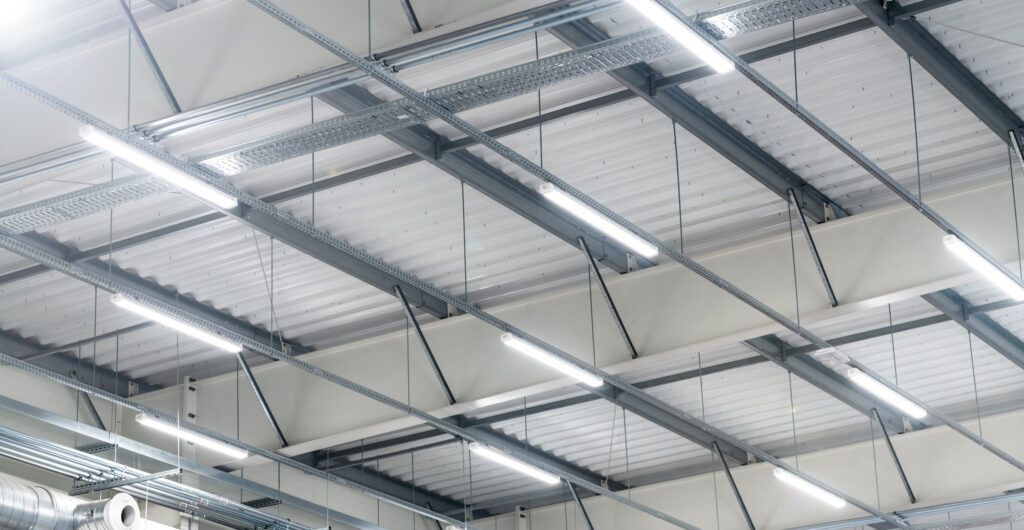
Failed fixtures aren't the only issue to watch for. Flickering lamps, declining output, inconsistent brightness, and other performance changes may also become more apparent as lighting is used for longer periods.
This is why commercial lighting maintenance shouldn't be limited to checking fixtures during daylight hours. Periodically inspecting your property after sunset lets you see how fixtures work together and identify gaps that might not be obvious during daytime inspections.
Interior Lighting Problems Can Stand Out During Winter, Too
Winter lighting concerns don't stop at the front door.
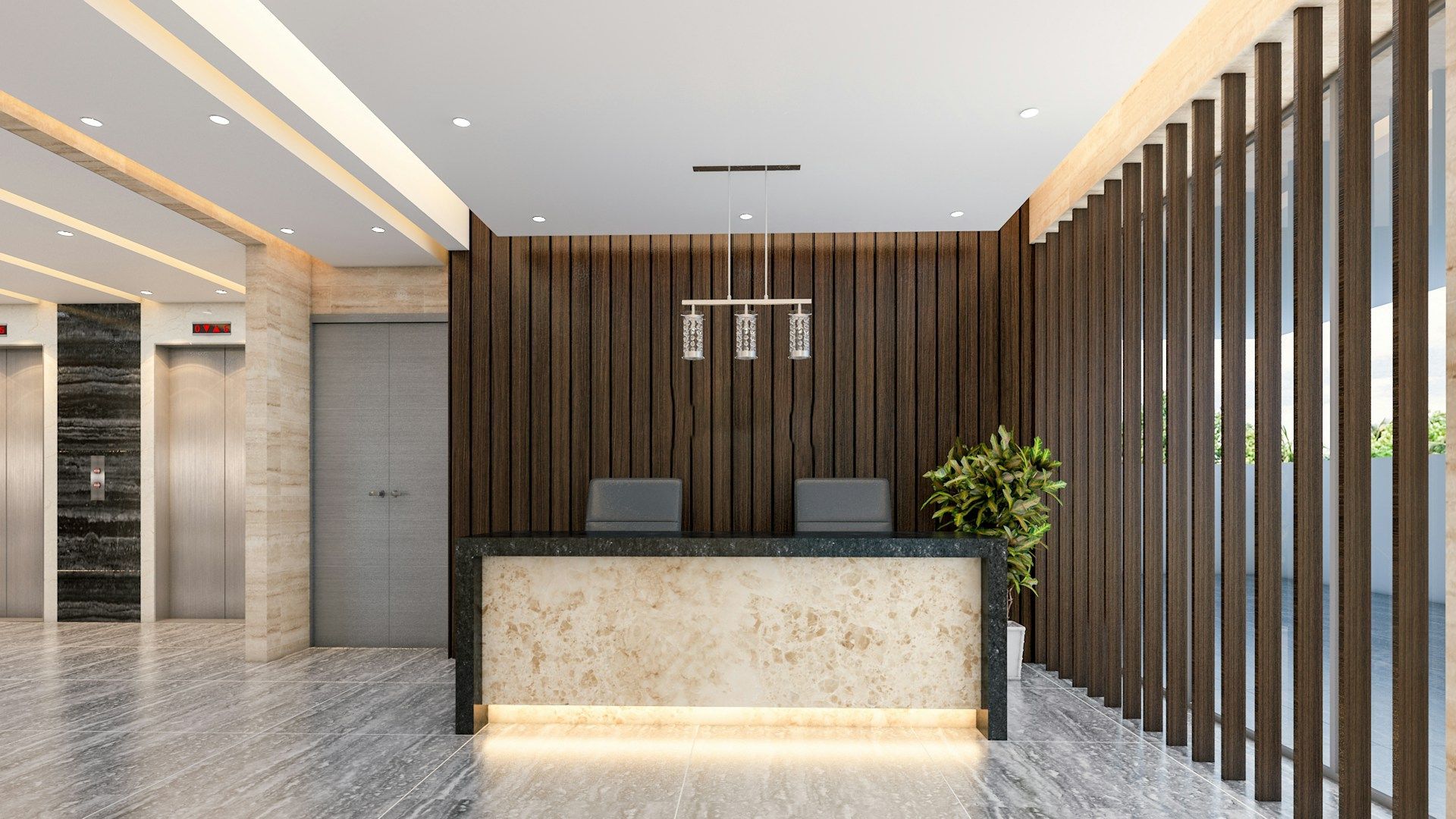
As daylight hours shrink, commercial interiors may depend more heavily on artificial lighting. Areas that benefited from abundant natural light in the summer might suddenly feel noticeably different.
You may begin to see:
- Uneven illumination between work areas
- Dim areas or unwanted shadows
- Glare and excessive brightness
- Workstations without adequate task visibility
- Noticeable differences between fixtures
- Spaces that relied more heavily on daylight than expected
Uneven illumination and glare are already common indicators of lighting-design problems in commercial environments. Reduced winter daylight can simply make those weaknesses harder to overlook.
Pay attention to employee feedback as well. Difficulty seeing work surfaces or adjusting positions to compensate for lighting can provide useful clues about areas worth evaluating.
Check Your Lighting Controls and Schedules
The end of daylight saving time is also a good reminder to review your lighting controls.
If exterior lighting operates on a fixed schedule, does that schedule still align with when employees arrive and leave? Are areas remaining dark longer than they should, or are lights operating when they're no longer necessary?
Timers, occupancy sensors, photocells, and other commercial lighting controls can help lighting respond more closely to how a facility is actually being used. The right strategy depends on the space, operating hours, occupancy patterns, and lighting system.
Seasonal changes provide a useful opportunity to confirm that the settings still make sense for current conditions.
Take a Winter Lighting Walkthrough
You don't necessarily need to wait for someone to report a problem before evaluating your winter commercial lighting.
After sunset, walk through the property as an employee, customer, or visitor would. Check:
- Parking lots and vehicle areas
- Sidewalks and pedestrian routes
- Building entrances and exits
- Steps, ramps, and changes in elevation
- Interior transition areas
- Frequently used workspaces
- Individual fixture performance
- Lighting controls and operating schedules
As you go, look beyond whether the lights simply turn on. Where does lighting seem uneven? Are there dark areas or distracting bright spots? Have fixtures failed? Does the lighting support how each area is actually being used?
If your walkthrough reveals recurring problems, a more comprehensive commercial lighting assessment can help determine whether the issue lies with individual fixtures, maintenance needs, controls, light distribution, or the overall system design.
Let Winter Shine a Light on Problems That Need Attention
Shorter winter days can reveal weaknesses in commercial lighting that were much easier to overlook when daylight lasted well into the evening.
If you've noticed dark parking areas, inconsistent interior lighting, failing fixtures, or lighting schedules that no longer match your facility's needs, our team at Starbeam Lighting can help.
A professional commercial lighting assessment can identify opportunities to improve visibility, performance, and control throughout your property.
Contact our team of lighting professionals to take a closer look at your facility and determine the right next steps.