When businesses begin evaluating their lighting systems, one of the first questions that often comes up is, "How many fixtures do we need?"
It sounds like a logical place to start. After all, adding more fixtures should result in a brighter, better-lit space, right?
Not necessarily.
While fixture counts are one factor in a lighting design, they tell only part of the story. Two facilities may have the same number of fixtures and experience completely different lighting results. Factors such as fixture output, placement, ceiling height, layout, and use of the space all influence lighting performance.
Ultimately, the goal of a commercial lighting system is not to install the greatest number of fixtures. It is to provide the right amount of light in the right places to support safety, productivity, comfort, and efficiency.
Why Fixture Counts Can Be Misleading
A common misconception is that lighting quality can be measured simply by counting fixtures.
In reality, today's commercial lighting technology offers a wide range of fixture types, outputs, and designs. Two fixtures that look nearly identical may produce significantly different amounts of usable light. Likewise, a newer LED fixture may provide better illumination than an older fixture while using less energy.
The layout of a space also makes a significant difference. A room with poorly placed fixtures may contain plenty of light sources but still suffer from dark areas, shadows, or uneven illumination.
Ceiling height, shelving, machinery, walls, and room configuration can further affect how light is distributed throughout a facility. This is one reason why commercial lighting projects require a thoughtful design approach rather than a simple fixture-count calculation.
What Are Light Levels?
When lighting professionals evaluate a space, they focus on light levels rather than fixture quantities.
Light levels refer to the amount of usable illumination reaching the areas where people actually perform tasks. In other words, the goal is not simply to create brightness but to provide adequate visibility for the work being done.
A warehouse employee locating inventory, an office worker reviewing documents, and a technician performing detailed work all have different lighting requirements. What feels perfectly adequate in one environment may be insufficient in another.
By focusing on light levels, businesses can better understand whether their lighting system is effectively supporting daily operations.

Different Spaces Have Different Lighting Requirements
One reason a one-size-fits-all approach rarely works is that every commercial environment has unique needs.
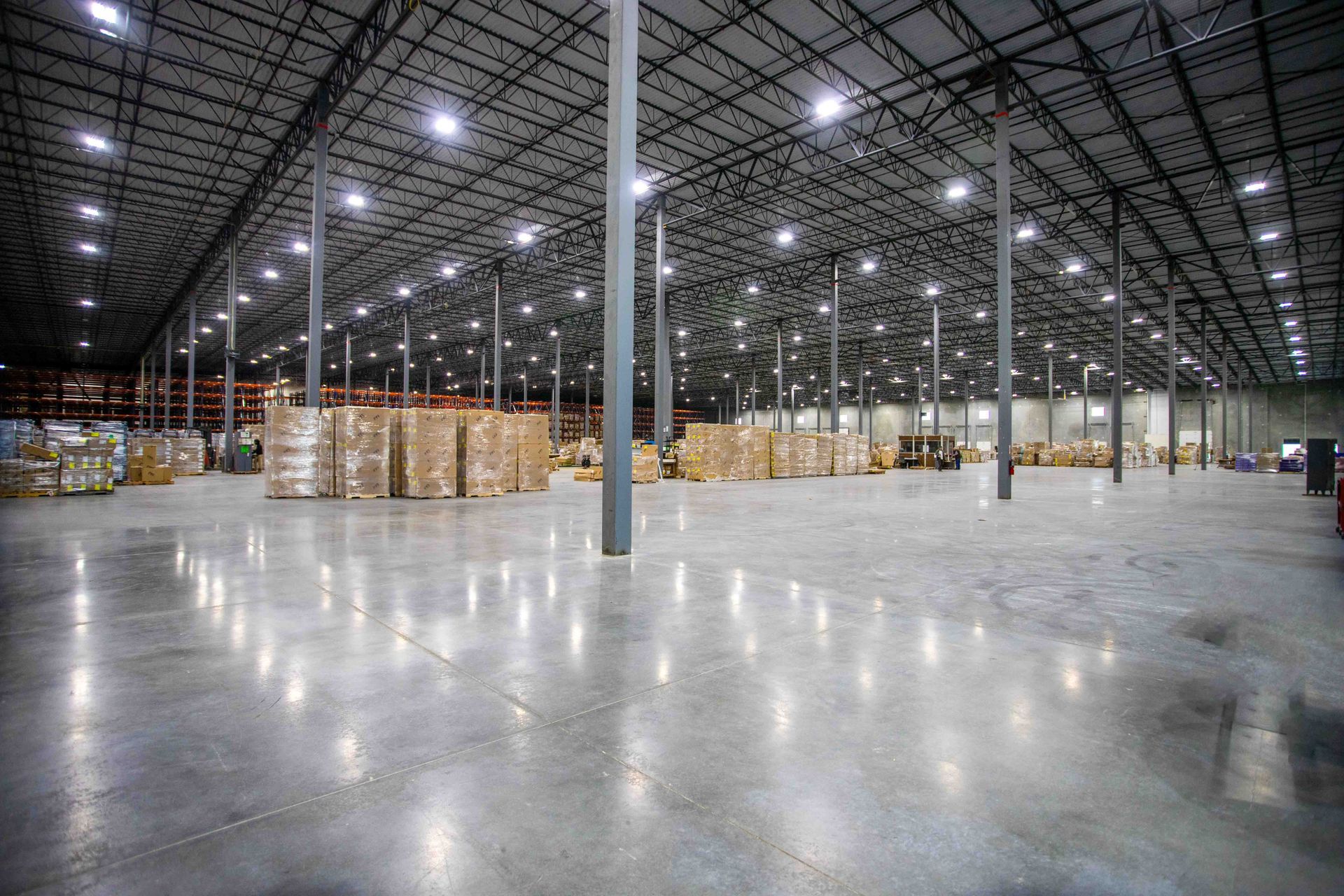
Warehouse aisles often require lighting that helps workers identify products, read labels, and navigate safely. Manufacturing environments may require higher light levels to support detailed work and quality control processes.
Office spaces typically prioritize occupant comfort while reducing glare and eye strain throughout the workday. Retail locations often use lighting to highlight products, improve the customer experience, and create an inviting atmosphere.
Exterior areas introduce another set of considerations, including visibility, security, and pedestrian safety.
Because each environment serves a different purpose, the appropriate lighting strategy may vary significantly from one facility to the next.
More Light Is Not Always Better
Another common misconception is that brighter automatically means better.
While insufficient light can create visibility challenges, too much light can create problems of its own.
Excessive brightness may contribute to glare, visual discomfort, and unnecessary energy consumption. Occupants can experience eye strain when lighting is overly intense or poorly balanced. In some settings, bright fixtures may even reduce visibility by creating harsh contrasts between illuminated and darker areas.
Effective lighting design focuses on providing the appropriate amount of light rather than simply maximizing brightness.
Uniformity Matters as Much as Brightness
One of the most overlooked aspects of lighting design is uniformity.
Imagine walking through a warehouse where some areas are brightly lit while others remain noticeably darker. Or consider an office where workstations near windows receive abundant light while other sections of the room feel dim.
Even when overall light output appears sufficient, uneven lighting can affect visibility, safety, and comfort.
A well-designed lighting system distributes illumination consistently throughout a space, helping reduce shadows, eliminate dark spots, and create a more comfortable environment for occupants.
Why Lighting Audits Focus on Performance
When businesses evaluate their current lighting systems, the most important question is not how many fixtures are installed. It is about whether the existing lighting meets the facility's needs.
A lighting assessment typically examines factors such as light levels, fixture placement, energy usage, operating conditions, and how the space is actually being used.
In some cases, the solution may involve adding fixtures. In others, it may involve replacing outdated technology, improving layout, adjusting controls, or reducing unnecessary lighting in overlit areas.
By focusing on performance rather than quantity, businesses can make more informed decisions about future improvements.
Better Lighting Decisions Start with Better Measurements
Commercial lighting should support the people, processes, and goals within a facility.
That is why successful lighting projects often begin with measuring existing conditions and understanding operational requirements rather than simply counting fixtures. The right lighting strategy focuses on light quality, distribution, efficiency, and functionality.
Whether the goal is to improve warehouse visibility, enhance office comfort, support manufacturing operations, or reduce energy costs, lighting performance matters far more than the number of fixtures installed.
Focus on Results, Not Just Fixture Numbers
A higher fixture count does not automatically produce better lighting. What matters most is how effectively a lighting system supports the space and the people using it.
By focusing on proper light levels, uniform distribution, occupant comfort, and operational needs, businesses can create lighting environments that improve safety, efficiency, and overall performance.
Starbeam Lighting helps businesses evaluate light levels, identify opportunities for improvement, and design lighting systems that support safety, efficiency, and long-term performance.
Contact us to learn how a professional lighting assessment can help optimize your facility.