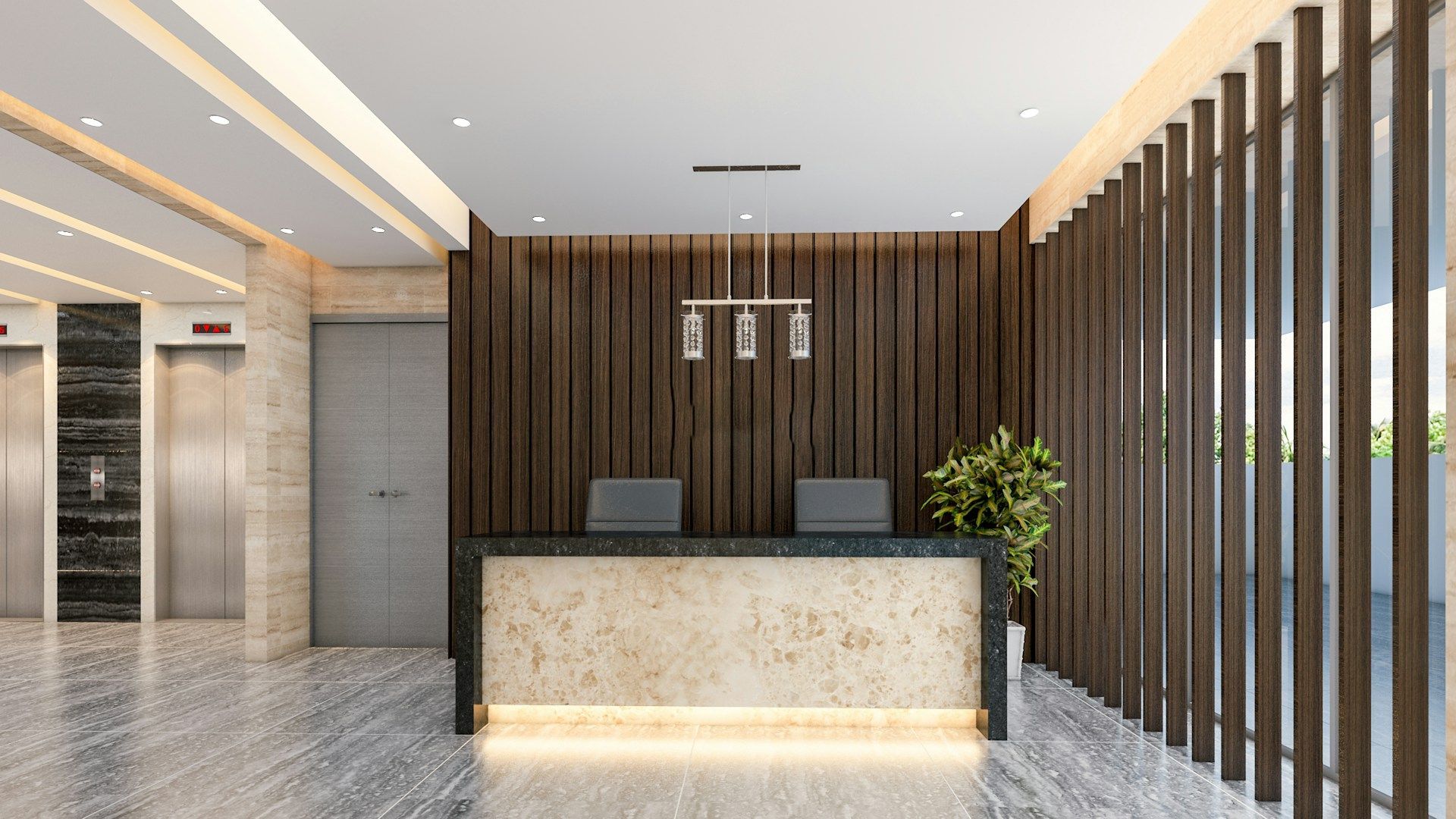
Types Of Industrial Lighting Fixtures. If you own or manage a warehouse, factory, or manufacturing plant, no doubt you want industrial lighting that’s safe and reliable, and helps your employees work more efficiently. There are five common types of industrial lighting fixtures used today, and Starbeam Lighting serving St. Louis covers all of them below.
Halogen
In a halogen lamp, light is created via a wire filament enclosed in a quartz tube, within which is pressurized halogen bromine or halogen iodine gas that reacts with the filament. These lamps burn bright and white, and are often employed in flood lights, headlights, and accent lighting. One advantage offered by halogen lamps is their ability to generate a powerful beam of light that can be focused on a specific area or product. Another upside is their diversity: halogen lamps come in different styles ranging from floods, reflective spotlights, and mini-can bulbs, to double-ended quartz, single-ended quartz, and parabolic aluminized spots. Our local lighting company has extensive experience with all of these.
Halogen lamps typically last 3,000 – 5,000 hours and have an energy efficiency of around 22 lumens per watt (LM/W).
Incandescent
Of the five lighting fixtures on this list, incandescent is the most common. These are traditional light bulbs: an electric current passes through a slender wire filament, the filament heats up, and white light is produced. Incandescent bulbs only last 500 – 1,000 hours and aren’t as efficient (18 LM/W) as other industrial lighting solutions, but they’re inexpensive and versatile, with usage in virtually any lighting environment: general, supplemental, and decorative.
Fluorescent
With a lifespan of 12,000 – 24,000 hours or more, and a maximum output of 105 LM/W, fluorescent lighting is exceptionally durable and efficient. In fact, they use a fifth of the wattage that incandescent bulbs use, but last 20 times longer. The construction of a fluorescent bulb is a bit more complex than the other solutions on this list. In layman’s terms, fluorescent light is the product of an electric arc passing through an inert gas.
High-Intensity Discharge (HID)
High-intensity discharge, or HID lighting, comes in three variations: mercury, high-pressure sodium, and metal halide. One of these gases is pressurized and fills an inner tube, through which an electric current passes. This process creates light, and an impressively powerful light at that. Though they take a few minutes to reach full brightness, HID lighting is a top choice for outdoor lighting, general lighting, and landscape lighting.
LED
Over the last decade, LED lighting’s popularity has increased tenfold. Like fluorescent lighting, LED offers high efficiency and a lengthy lifespan – so lengthy, in fact, that some LED bulbs and diodes can last for up to 100,000 hours. Also, unlike other lighting options, LEDs don’t burn out and cease functioning – they just become dimmer after years of use. Another big upside to pursuing an LED lighting solution is its eco-friendliness. LED lights have zero toxic chemicals, as opposed to fluorescent light bulbs which comprise several different materials, some of which are unsafe for the environment. And lastly, LED lighting is becoming an increasingly good investment, with many LED systems paying for themselves within two years.
Work with an Experienced Lighting Specialist
Industrial lighting fixtures are a topic our local lighting company knows plenty about. If your business’s lighting system is in need of repairs or bulb replacement, or if you’re interested in upgrading your current lighting scheme, contact the pros at Starbeam Lighting today.
The post Five Common Types Of Industrial Lighting Fixtures appeared first on Starbeam Lighting.