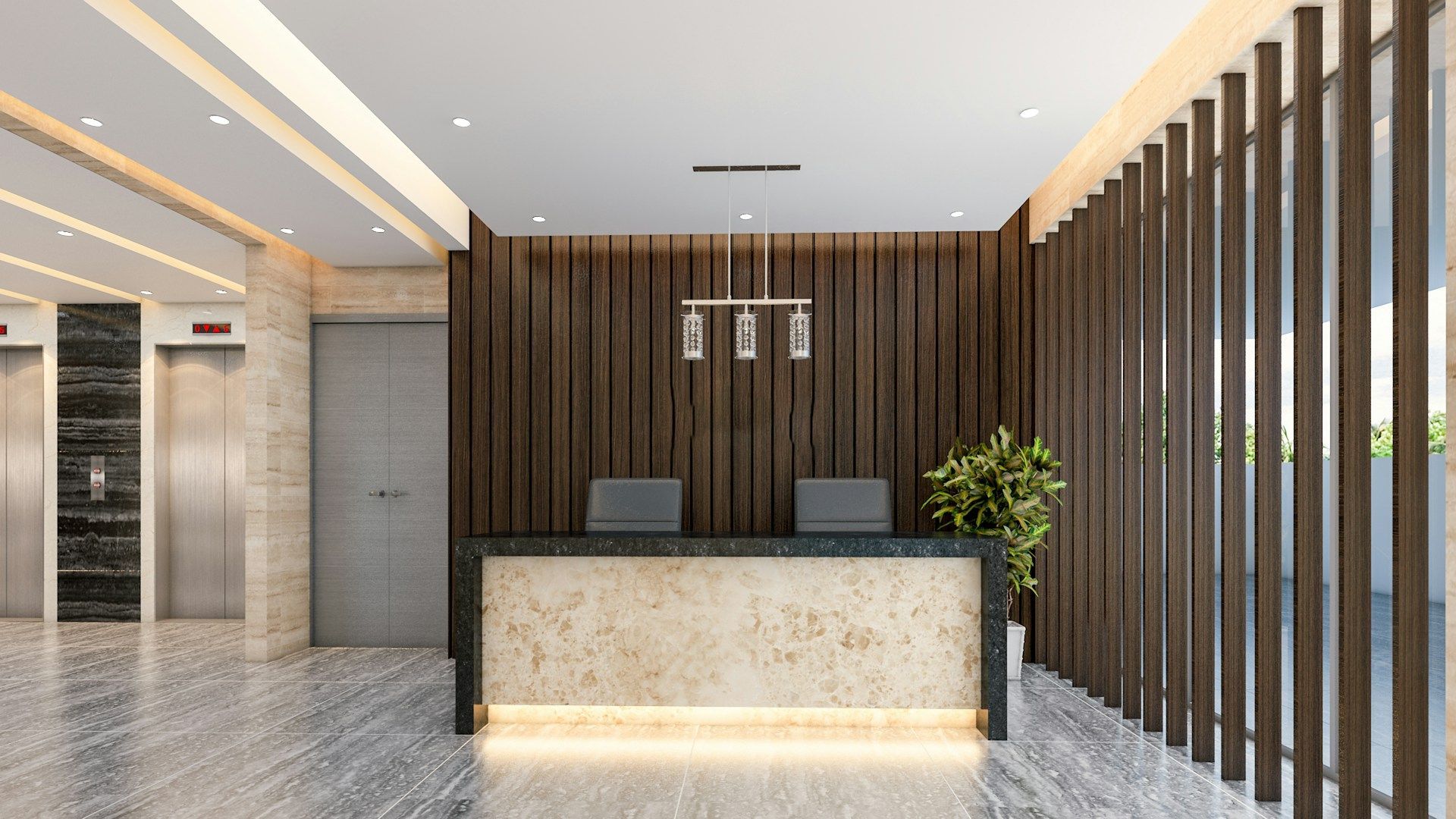
Lighting creates a safe and inviting environment for commercial property employees, customers, and visitors, and the strategic placement of these fixtures can enhance security, improve energy efficiency, and elevate the overall aesthetic appeal of your property. In this blog post, we’ll explore various areas throughout a commercial property where lighting should be present and how we at Starbeam Lighting Solutions can assist you in optimizing your lighting solutions.
Entryways/Exits
Entryways and exits of your property are the first and last contact points for anyone entering or leaving. Proper lighting in these areas is essential for security measures and creating a welcoming atmosphere. Consider installing outdoor sconces, floodlights, or wall-mounted fixtures to illuminate entrances and exits. These not only enhance visibility but also deter potential intruders. Additionally, ensure that exit signs are well-positioned and adequately lit to guide occupants during emergencies.
Parking Lots
A well-lit parking lot is crucial for the safety and convenience of your customers and employees. Insufficient lighting can lead to accidents, theft, or vandalism. Consider high-mounted pole lights or LED parking lot fixtures to ensure uniform illumination. These fixtures provide ample light coverage, making it easier for people to navigate and locate their vehicles. Furthermore, incorporating motion sensors in your parking lot lights can help save energy during low-traffic periods.
Exterior
The exterior of your commercial property plays a vital role in creating a positive first impression. Expertly designed exterior lighting can enhance architectural features, highlight pathways, and draw attention to signage. Consider incorporating landscape lighting to accentuate the beauty of your property’s facade. You can create a visually appealing atmosphere by strategically illuminating trees, shrubs, and walkways while improving safety and security. Motion-activated lights are also effective in deterring trespassers or intruders.

Hallways
Well-lit hallways are essential for ensuring the safety and easy navigation of occupants and visitors within your property. Proper lighting in hallways reduces the risk of accidents and enhances overall visibility. Ceiling-mounted fixtures or recessed lighting are ideal for providing even illumination throughout the space. Installing occupancy sensors can optimize energy usage by automatically turning off lights in low-traffic areas when not needed.
Bathrooms
Proper bathroom lighting is crucial for functionality, safety, and user experience. Bright vanity lights or sconces placed above mirrors eliminate shadows and ensure adequate visibility for tasks such as grooming and hygiene. Incorporating energy-efficient LED bulbs in bathroom fixtures reduces maintenance and helps lower electricity costs in the long run.
Warehouse
Warehouses are often large, open spaces that require ample lighting for productivity, safety, and inventory management. High-bay or low-bay fixtures are designed to distribute uniform light in such areas. Properly illuminated warehouses improve visibility, reduce the risk of accidents, and enhance efficiency. Consider incorporating innovative lighting solutions or occupancy sensors to optimize energy usage by only activating lights when needed.
Office Space
The lighting in office spaces significantly impacts the productivity and well-being of employees. Properly designed lighting can reduce eye strain, increase focus, and create a comfortable work environment. Task lighting, such as desk lamps, should be provided to employees to allow them to adjust lighting levels according to their needs. Additionally, daylight harvesting systems can maximize natural light, reducing energy consumption and creating a more pleasant atmosphere.
Strategic placement of lighting fixtures throughout your commercial property is essential for creating a safe, energy-efficient, and visually appealing environment. You can enhance security, improve productivity, and save energy by prioritizing proper lighting in entryways/exits, parking lots, exteriors, hallways, bathrooms, warehouses, and office spaces.

Work With Starbeam Lighting Solutions
Here at Starbeam Lighting Solutions, we are dedicated to helping commercial property owners optimize their lighting solutions. Through lighting audits and tailored recommendations, Starbeam can assist you in achieving the perfect lighting setup for your property. Invest in the right lighting solutions today and experience the positive impact it can have on your business. Contact us today!
The post Where Should I Put My Light Fixtures? appeared first on Starbeam Lighting.