Facility managers across the country are doing everything they can to create schools and educational facilities that are safe and healthy for students and staff, and this includes upgrading the lighting to LED bulbs and fixtures. Although many decision-makers may have sticker shock when looking at the cost of the upgrade, it’s important to consider how the benefits of LED lighting will offer a return on investment.
Improved Academic Performance
Hands-down, the biggest benefit of LED lighting in schools is that they have been proven time and again to help improve academic performance. LEDs are customizable and dimmable and can imitate natural light, which in turn improves concentration and creates a better learning environment. Scientists have also uncovered the fact that LEDs can support the development of cognitive skills and decrease student error.
Energy Savings
Another ubiquitous advantage of LEDs — regardless of the application — is the energy efficiency compared to traditional lighting. Schools that are already running on tight budgets see significant savings after an upgrade; 75-80% on average according to the US Department of Energy. The money saved on utilities can be reallocated to other programs for students.

Increased Lighting Control
Unlike traditional incandescent or fluorescent lighting, it’s much easier to add controls to LEDs and fixtures. This allows for increased flexibility when the warmth or color of the lighting needs to be changed to better match student activity. Virtual learners won’t get distracted by the on-screen flickering; that doesn’t happen with LED lighting either. Connectivity through the Internet of Things (IoT) tech allows for the control of lighting remotely along with the ability to automate lighting to turn on and off based on occupancy.
Minimal Maintenance
If your school facility still has traditional lighting, think about the number of bulbs throughout the building. Take that number and use it to calculate the time and cost of replacing those bulbs as they burn out every year (or even sooner.) Traditional bulbs last around 10,000 hours, while LED bulbs last 5x as longer — now think about how much time you would save by replacing fewer bulbs less often, with less disruption to the school day and far lower maintenance costs.
Better Lighting Quality
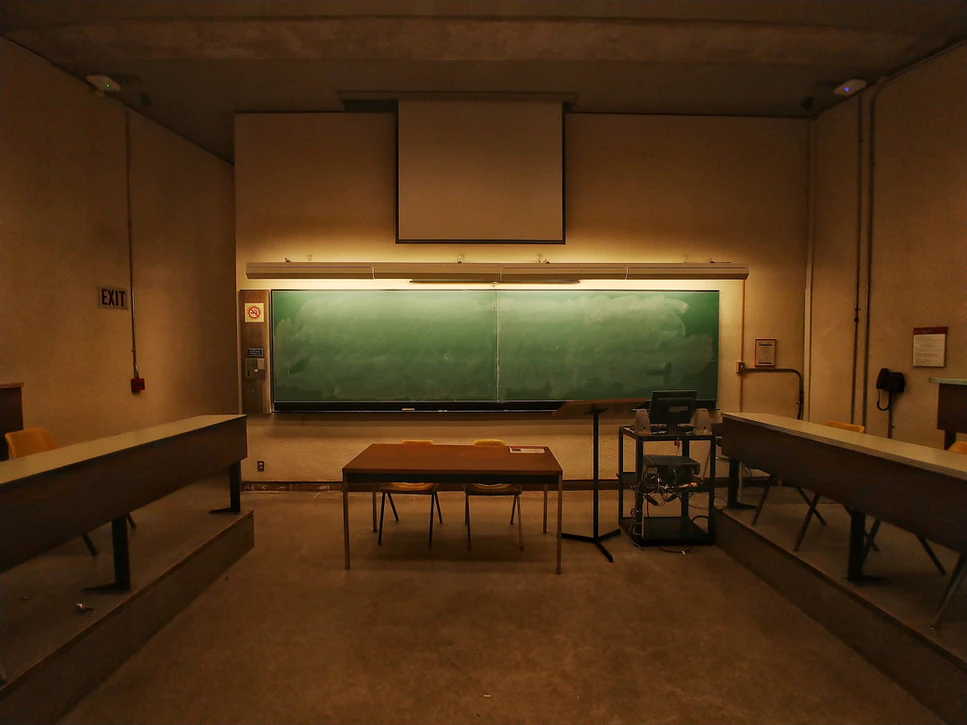
For students and staff that already have vision or learning challenges, the flicker and glare of traditional lighting can be a distraction at best and a health hazard at worst. Too much exposure can also be a cause of behavioral issues, lack of concentration, and increased hyperactivity in the school setting. LEDs offer continuous streams of light without the flicker and glare, and won’t give off harmful radiation like incandescent and fluorescent lighting.
Choosing LEDs for School Facilities
If we’ve said it once, we’ve said it a million times: Not all LED lighting is created equal, and to really see the benefits of your upgrade you need to invest in quality products and have them professionally installed. This requires some research and planning on the part of facility managers and decision-makers.
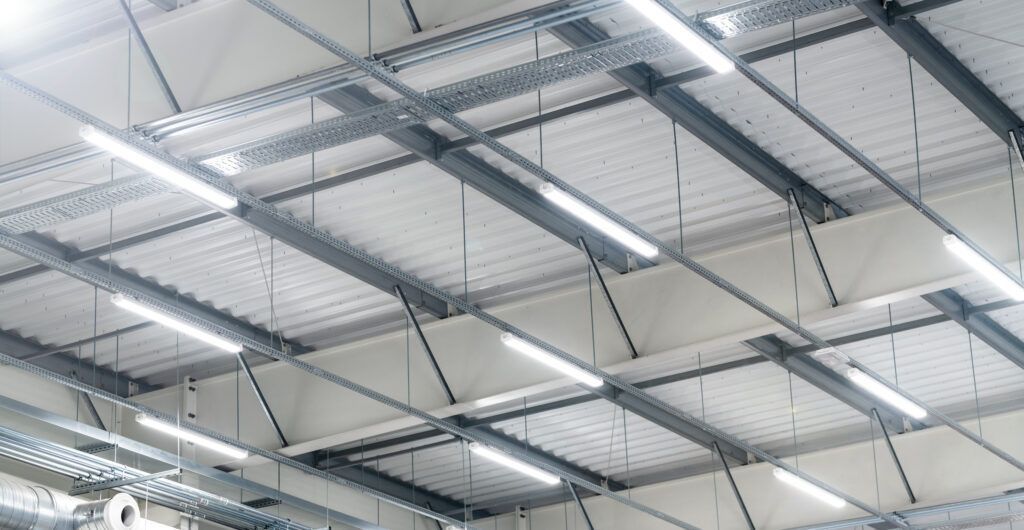
When it comes to interior lighting fixtures, there are a lot of questions to answer. For instance, should you use LED or traditional lights? Should you opt for high bay lighting or pendant lighting? If you choose bay lighting, what’s the best way to lay it out? Why continue with outdated lighting in your schools when you could instead have the most modern options at your disposal?
These questions are typically difficult for the average business owner to answer. So, it’s important to get the right help in upgrading your school lighting. Work with a company that knows what it’s doing and can advise you. Additionally, you need a partner that offers enough products and services to ensure the best indoor lighting results.
We work with a large variety of clients — including schools — and we can provide the products you need. Moreover, we can offer assistance acquiring energy rebates and seeing ROI within 12 to 24 months. We would love to help you explore your options. Contact us and schedule an audit!
The post The Benefits of LED Lighting in Schools appeared first on Starbeam Lighting.