Regardless of what business you’re in, chances are you’ve heard of LED lighting and the outstanding benefits it provides. Maybe you’ve even gotten as far as discussing an LED retrofit , but are unsure how to proceed. Starbeam Lighting is here to fill in the blanks for you with this informative blog covering all things retrofit.
LED Retrofit – What Is It?
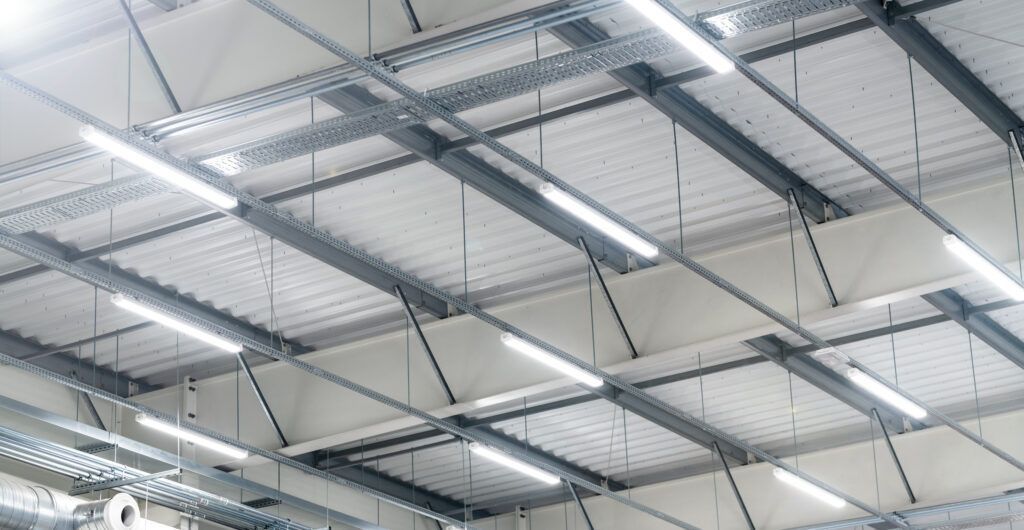
On its own, the word “retrofit” implies that something new is being introduced into an environment that was not originally designed with it in mind. So when we say “LED retrofit”, we mean that you’re introducing LED lighting into your office, warehouse, parking garage, etc. You could also look at it from the perspective of a “conversion”, in the sense that you’re converting your environment into one that utilizes LED lighting.
LED Retrofit – Benefits
Four of the biggest benefits associated with an LED retrofit are:
- Significant cost-savings in terms of power used, and ongoing maintenance fees for parts and labor
- A huge boost in energy efficiency, especially versus traditional filament light bulbs
- Superior lighting quality, equating to a safer, healthier, more productive work environment
- “Green” rebate opportunities at the federal and state levels, along with opportunities to partner with energy-savings companies (ESCOs)
There are also a number of “smaller” advantages offered by an LED retrofit. These include:
Choice
A retrofit allows you to tap into a vast array of different LED retrofit products, offering the opportunity to customize your retrofit in terms of color, wattage, and style
Ease of switching
LED retrofits come in different levels of complexity. The simplest path involves nothing more than replacing your old light bulbs with LED screw-in lamps that mesh with your existing fixtures (this is also known as an “LED plug-and-play” solution). Even more complex retrofits, i.e. those involving new fixtures, dimming capability, a new lighting infrastructure, etc. can still be accomplished smoothly and cost-effectively, especially when dealing with new construction.
Minimal Maintenance
All retrofit LED products possess an unbelievably long lifespan and require minimal maintenance. As long as you keep up with periodic dusting and inspection, you’ll maximize the output of your LED bulbs and the durability of each light’s components.
Important Considerations
Before moving ahead with an LED retrofit, there are a couple of important considerations to keep in mind:
- Although most LED lighting solutions are designed to integrate with standard light fixtures, switching to LED lights without changing out your fixtures could somewhat limit your LED lighting options. If however you opt for a full retrofit that includes upgrading your lights and your fixtures, then you’ll have the full range of LED solutions at your disposal.
- If you’re interested in LED lights with dimming capability, you’ll need to invest in new, LED-specific dimming hardware as well as the lights themselves. Traditional dimming technology is incompatible with an LED retrofit.
Retrofit Today and Reap The Benefits of LED
A large number of businesses throughout St. Louis are switching to retrofit LED lights or have already made the change. Ensure your company is next in line by contacting Starbeam Lighting today and scheduling a free lighting audit. In as little as 12 months, you’ll begin seeing exceptional ROI on your LED retrofit investment.
The post What Does Retrofit Mean? appeared first on Starbeam Lighting.